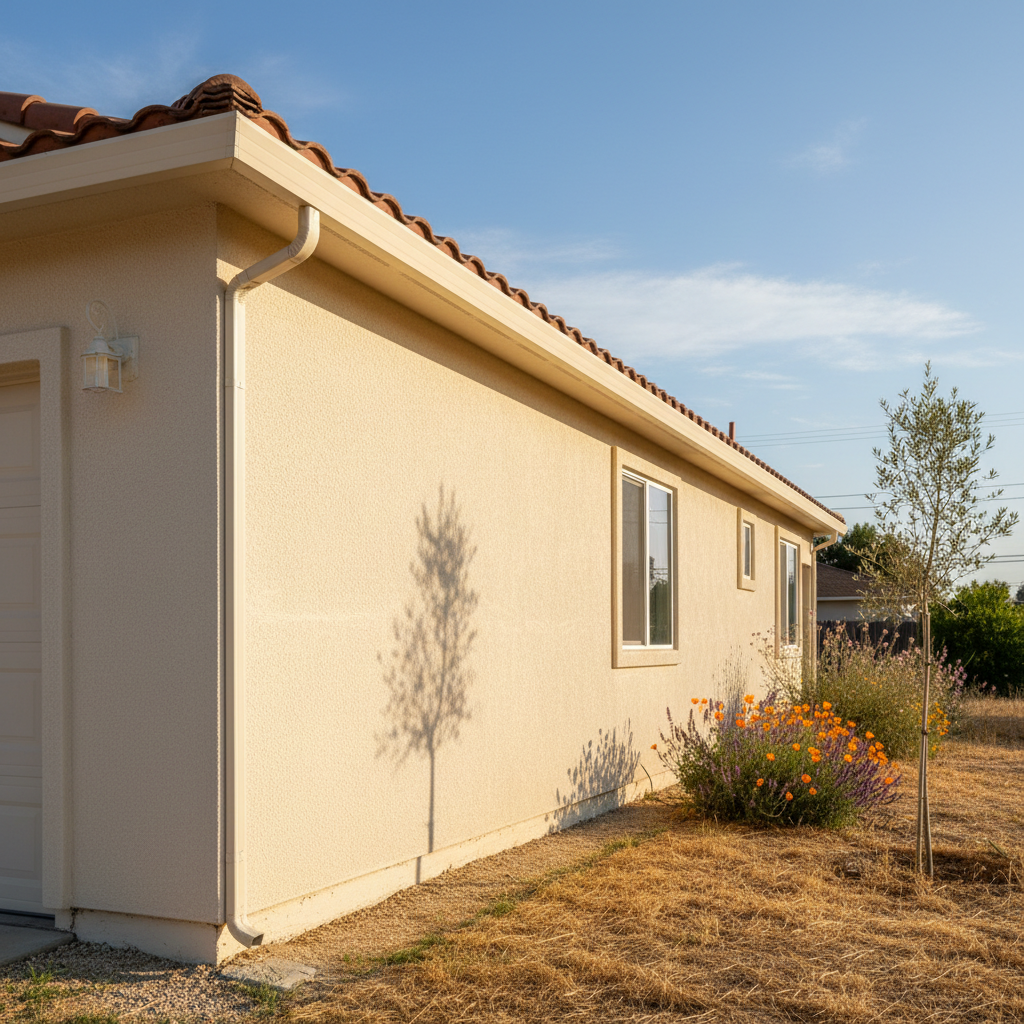
Alright, let's talk about EIFS. If you're thinking about Exterior Insulation and Finish Systems for your place here in Modesto, you're probably wondering what it's going to cost. I totally get it. Nobody likes surprises when it comes to home improvements, especially for something as crucial as your home's exterior. So, let me give you the real lowdown on EIFS installation costs.
What Makes EIFS Pricing Go Up or Down?
You know how everyone says "it depends" for everything? Well, with EIFS, that's genuinely true; it really does hinge on a few key things. But I'm not just going to leave it at that. Here's what I've seen makes the biggest difference in the final price tag:
- How Big and Tricky Your Home Is: This one's a no-brainer, right? More square footage means more materials and more work. But it's not just about flat walls. If your home has a lot of architectural flair – think intricate gables, multiple bump-outs, or a bunch of windows and doors that need careful flashing – that's going to add to the complexity and, naturally, the cost. And those hard-to-reach spots, like high peaks on a two-story home? They mean more time for scaffolding setup and specialized work.
- The Kind of EIFS System You Choose: There are different types of EIFS out there. Modern systems, often called 'drainable EIFS' or 'EIFS with drainage,' include an air and water-resistive barrier behind the insulation to handle moisture. This is super important, especially in our Central Valley climate where you get those intense summer downpours followed by long dry spells. Older 'barrier EIFS' systems had issues with trapped moisture, so you definitely want to make sure you're getting a modern, drainable system. The type of system affects both material costs and how complex the installation will be.
- How Thick the Insulation Is: EIFS is an insulation system, after all. The thicker the insulation board (usually expanded polystyrene or EPS), the better the R-value, which means better energy efficiency for you. But thicker boards cost more, and sometimes they're a bit more involved to put in.
- The Finish Texture and Color: EIFS gives you a ton of design freedom. You can get finishes that look just like stucco, stone, or even brick. Fine sand, medium float, or specialty aggregate finishes all have different material price points. Darker colors might also need extra coats to really get that true, rich look you're after.
- The Condition of Your Walls and How Much Prep Work is Needed: If you're putting EIFS over an existing exterior, or if your sheathing needs some TLC, that's extra work. Older homes, especially those built before modern moisture management standards, might need a lot of prep to make sure the EIFS sticks properly and does its job. This prep work, including sheathing repair or air barrier upgrades, can add 10-15% to the total cost. But honestly, it's absolutely essential for keeping your warranty valid and ensuring long-term performance.
- Labor Costs: This is a big one. Installing EIFS is a specialized skill. It's a multi-layered system that demands precision. You want certified, experienced applicators who truly know their stuff. Labor rates vary, and skilled labor isn't cheap, but it's worth every penny for a proper installation, don't you think?
What EIFS Costs in Modesto, Generally Speaking
Alright, let's get down to some actual numbers. Across the country, EIFS installation usually runs from $8 to $14 per square foot, all-in. For an average-sized home, say around 2,000 square feet, you're generally looking at a total project cost between $16,500 and $27,500.
Now, Modesto isn't the cheapest place to live, but it's not the most expensive either. I'd say you can expect to be right in that national range, maybe a little higher for really complex jobs or those premium finishes. For a basic, straightforward installation on a home with simple architectural lines, you might see prices closer to the lower end, perhaps $8-$10 per square foot. If your place has a more intricate design, higher-end finishes, or needs significant prep work, it could push towards the $12-$14 per square foot mark, or even a bit higher for truly custom work.
To break it down a bit, materials usually account for $3 to $5 per square foot, and labor can be $5 to $9 per square foot.
What Your Quote Should Include
When you get a quote from Modesto Stucco & Plastering, or any reputable contractor for that matter, here's what you should expect to see:
- A Detailed Scope of Work: This isn't just